
Introduction
At the heart of Gothic literature, Bram Stoker's Dracula is one of the most influential and iconic novels ever written. Published in 1897, it not only defined the figure of the vampire in popular culture, but also captured the fears, obsessions and spirit of the Victorian era. With its dark atmosphere, unforgettable characters and epistolary narrative, Dracula has transcended time to become an immortal classic.
But behind this masterpiece lies a fascinating story. From its many influences to its author's creative choices, Dracula is the result of a process full of curiosity, research and deeply personal elements that profoundly shaped its creator, Bram Stoker.
In this article, we will uncover some of Dracula's best-kept secrets: from its dreamlike origins to the many discarded versions, as well as the cultural and literary inspirations that gave life to the most famous vampire of all time.

1. The origin of Dracula
1.1. Dream Inspiration: A Vampire Born of a Nightmare
Like many great works of literature, Dracula was born out of a dream. According to biographer Harry Ludlam, Bram Stoker had a nightmare after eating crab for dinner (though it's unclear whether the seafood was actually to blame, the anecdote stands). That night, Stoker dreamt of a "vampire king rising from his grave", an image that left a deep impression on him.
In his private notes, Stoker described a scene that would later become fundamental to the novel: a young man (who would later become Jonathan Harker) is attacked by three female vampires, but is saved by Count Dracula, who angrily declares: "This man is mine. I want him for myself".
This dream became the starting point of an obsession that led Stoker to research vampire folklore and ultimately create one of the most influential stories in literary history.

1.2. The Influence of His Mother, Charlotte Stoker
Bram Stoker's childhood was marked by a mysterious illness that kept him bedridden for years. During that time, his mother, Charlotte Stoker, told him horror stories based on her own experiences during a cholera epidemic in Ireland.
Charlotte described how bodies were thrown into mass graves, often without checking that the victims were really dead. She also told stories of people who had been buried alive by mistake, waking up in their coffins and struggling to escape.
These macabre tales left a lasting impression on young Bram (how not!) and undoubtedly laid the foundations for his fascination with death, the supernatural and horror. Many of these haunting images can be seen in Dracula, particularly in the scenes of exhumation and vampirism, which reflect Victorian fears of death and bodily corruption.
1.3. International Vampire Folklore
To create his iconic vampire, Stoker didn't rely solely on his imagination. He spent years researching vampire folklore and legends in at least 13 countries, compiling stories of creatures that rose from their graves to feed on the living.
One of the most intriguing cases he came across was the «New England Vampire Scare", an episode that occurred in 19th century America. During a tuberculosis epidemic, people believed that the sick were being attacked by vampires, leading to the exhumation and mutilation of corpses in an attempt to stop the disease.
Another fascinating detail is that Stoker also explored vampire lore from Eastern Europe, where vampires were often described as grotesque and demonic figures - a stark contrast to the seductive Dracula we know today.
In addition, Stoker drew on elements from earlier vampire literature, such as The Vampyre (1819), by John Polidori, and Carmilla (1872), by Sheridan Le Fanu, which added an aristocratic and erotic component to the vampire myth. These elements were fundamental in shaping the character of Count Dracula.


2. The evolution of the Novel
2.1. Early Ideas and Discarded Versions
Before becoming the masterpiece we know today, Dracula went through several preliminary versions that reveal Bram Stoker’s creative process. Stoker’s notes, preserved at the Rosenbach Museum and Library in Philadelphia, contain early ideas that differ radically from the final plot.
One of the discarded ideas was to set the story at a dinner party at Dr. Seward's house, with 13 guests. Each of the attendees would share a strange or terrifying tale, and the stories would be linked by a common thread: the arrival of Dracula, who would burst into the gathering to unleash chaos.
Other ideas that never materialized include:
- He "Munich Dead House", a terrifying scene that was going to take place in a morgue in Munich.
- Count Wampyr, the villain's original name before being renamed Dracula.
- A werewolf, who would have killed one of the members of the "Crew of Light", the group of friends who confront Dracula.
These early concepts show how Stoker explored different directions before settling on the narrative we know today, with its structured focus on the characters’ diaries and letters.
2.2. The change of Title
The process of naming the novel also went through several stages. Stoker first considered calling it The Dead Undead (The undead dead), but later shortened the title to The Undead (The Undead). It wasn't until he discovered the name «Dracula" during his research that he decided to use it as the final title.
The term 'Dracula' or 'Draculea' is Romanian in origin and can be translated as 'son of the dragon' or 'son of the devil'. It is associated with Vlad III Dracula, also known as Vlad the Impaler, a 15th century Wallachian prince notorious for his brutality. Although Vlad does not play a direct role in the story, his name and its sinister connotations fit perfectly with the tone of the novel.
2.3. The Figure of Vlad the Impaler
It is a common misconception that Dracula is directly based on Vlad the Impaler. While Bram Stoker incorporated historical references into his research, there is no conclusive evidence that he had an in-depth understanding of Vlad III’s life. In Stoker’s notes, he mentions An Account of the Principalities of Wallachia and Moldova (1820), by William Wilkinson, a book that describes several leaders called "Dracula", including Vlad Tepes.
What is clear is that Stoker was fascinated by the meaning of the name "Dracula" and used it to christen his villain. However, beyond the name and a few superficial connections, the character of Count Dracula is an original creation by Stoker, shaped more by folklore and Gothic literature than by the historical figure of Vlad.

3. Historical and Cultural Context
3.1. The Connection with Jack the Ripper
Victorian London, the setting for Dracula, was one of fear and morbid fascination, largely due to the infamous murders of Jack the Ripper in 1888. These crimes not only shocked society, but created an atmosphere of darkness and suspicion that influenced Stoker's work.
In the prologue to the 1901 Icelandic edition, Stoker refers to "the recent horrors in London," an allusion many interpret as a nod to Jack the Ripper. Although there is no direct connection between the murders and the plot of Dracula, the social climate of the time—with its obsession with the macabre and the unknown—was perfectly reflected in the novel.
3.2. The Victorian Era and Scientific Progress
The Victorian era was a period of great scientific advancements, but also of tension between science and the supernatural. Dracula reflects this clash, combining elements of folklore and superstition with medical and technological references.
One of the most notable aspects of the novel is the use of blood transfusions, a relatively new procedure at the time. Stoker consulted his brother Thornley, a renowned surgeon, to ensure the accuracy of these details. As well as adding realism, the transfusions symbolise the struggle between life and death, a central theme of the novel.
In addition, Dracula incorporates other technological innovations of the time, such as typewriters, phonographs and telegrams, reinforcing the sense of modernity clashing with the ancient supernatural forces represented by the Count.
4. Settings and Atmosphere
4.1. Why Transylvania?
Transylvania, with its remote mountains and mysterious atmosphere, was the perfect setting for Stoker's story. Although he never visited the region, Stoker researched it extensively through books and maps.
One of his main sources was An Account of the Principalities of Wallachia and Moldova (1820) by William Wilkinson, which describes the landscapes and customs of the area. Through this research, Stoker created a fictionalized version of Transylvania that was convincing enough for Victorian readers.
The use of Transylvania as a setting also helped reinforce the idea of Dracula as a foreign and threatening figure, a recurring theme in Gothic literature of the period. Here we are referring to the theme of "otherness," which I already mentioned in the review of the novel.
4.2. Dracula’s Castle and Its Possible Inspiration in Scotland
Although Dracula's castle is set in Transylvania, many critics believe that Stoker was inspired by Slains Castle, a ruin located in Cruden Bay, Scotland.
Stoker spent several summers in Cruden Bay while working on the novel, and it is likely that the imposing ruins of the castle, perched on a cliff overlooking the sea, influenced his description of the Count’s fortress. The image of a "vast, ruined castle whose tall windows emit no light" aligns perfectly with Slains Castle’s haunting atmosphere.

5. Characters and Key Scenes
5.1. Lucy Westenra and the Real-Life Exhumation
The tragic story of Lucy Westenra is one of the most striking and macabre moments in Dracula. After being turned into a vampire by the Count, Lucy becomes one of the undead and is finally destroyed when her fiancé and his companions open her coffin and drive a stake through her heart.
This fictional act may have been inspired by a real-life incident involving Dante Gabriel Rossetti, the Pre-Raphaelite poet and painter.
In 1862, Rossetti buried his wife, Elizabeth Siddal, with a book of poems that he had lovingly placed under her red hair. Years later, in 1869, he changed his mind and decided to retrieve the manuscript for publication. To this end, he arranged for Siddal's body to be exhumed at night. According to reports, some of Elizabeth's hair came loose during the process - a gruesome and disturbing detail.
This incident, well known in literary circles at the time, may have influenced Stoker's portrayal of exhumations and vampirism in the novel. The connection between Lucy and this real-life event lies in the themes of death and the violation of its supposed peace, reflecting Victorian fears of corpses and physical decay.
5.2. The Crew of Light and Its Literary Influences
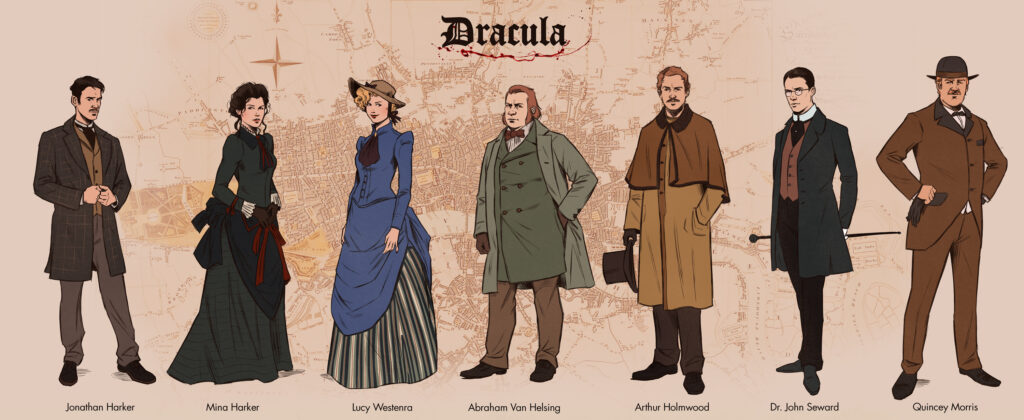
The "Crew of Light" is the group of characters who unite to confront Count Dracula in the novel: Van Helsing, Dr. Seward, Jonathan Harker, Mina Harker, Arthur Holmwood, and Quincey Morris. This group not only represents the combined forces of good against evil but also echoes the dynamic of Victorian adventure novels.
In the 19th century, adventure novels like King Solomon’s Mines (1885) by H. Rider Haggard were immensely popular. These stories often featured groups of men (and occasionally women) uniting their skills to face a common enemy. Stoker adapted this structure for the horror genre, creating a diverse team that combines intellect, bravery, and modernity (such as technology and medical knowledge) to defeat a supernatural foe.
Each member of the Crew of Light represents a key Victorian virtu
- Van Helsing (The vampire expert who guides the group) Knowledge and science.
- Jonathan Harker, duty and perseverance.
- Mina Harker (Jonathan's wife and the Count's targets), intelligence and morals (and a rare example of an active woman in Gothic narrative).
- Arthur Holmwood (Lucy's fiancé) and Quincey Morris (American Adventurer), sacrifice and loyalty.
- Dr. Seward (Director of the Carfax Asylum), scientific rationality versus the supernatural.
The members of the Light Group perfectly reflect Victorian values, while also symbolizing the struggle between 19th-century modernity and ancestral forces belonging to folklore and superstition.
6. Translations and Adaptations
6.1. The Icelandic Translation: Makt Myrkranna
In 1901, just four years after the publication of Dracula, the Icelandic newspaper Fjallkonan published a translation of the novel under the title Makt Myrkranna (The powers of darkness). However, this was far from a faithful translation of the original. The translator, Valdimar Ásmundsson, made significant changes to the story, adding more eroticism and graphic violence, while removing the multiple narrators that characterised the original version.
Furthermore, Makt Myrkranna is considerably shorter than Dracula. It focuses on the opening scenes in Dracula's castle and reduces both the number of characters and subplots.
Interestingly, some critics consider Ásmundsson's prose more agile and effective than Stoker's, which has sparked debates about which version is more "literary." However, what is undeniable is that this adaptation is a fascinating example of how a work can be transformed when reinterpreted in another language and culture.
6.2. Stoker's Play (and Its Failure)
Before publishing Dracula, Bram Stoker adapted his story into a play in order to secure the dramatic rights to the novel, a common Victorian practice that allowed authors to retain control over future adaptations.
On 18 May 1897, just days before the novel was published, Stoker staged a public performance of the play at the Lyceum Theatre. However, the production was a disaster. It lasted six hours and was a mixture of excerpts from the novel and hastily written dialogue. Only two people attended, and it's believed they stayed out of loyalty to the author rather than enthusiasm for the play.
Stoker's employer, Henry Irving - who had been a major inspiration for the character of Dracula - refused to play the lead role, calling the play "dreadful"dreadful. This theatrical failure was the first attempt to bring the vampire to the stage, although success would come in other adaptations decades later.

6.3. The case of Nosferatu
After Bram Stoker's death in 1912, his widow, Florence Balcombe (who, incidentally, had a romantic relationship with Oscar Wilde before marrying Stoker - sparking speculation about Wilde's influence on Dracula's character - some literary gossip here!), inherited the rights to Dracula. In 1922, the German production company Prana Film released Nosferatu: Eine Symphonie des Grauens, directed by F.W. Murnau. Although the names of the characters and some plot elements were slightly altered (Dracula became "Orlok"), Nosferatu was clearly an unauthorised adaptation of the novel.
Florence sued the production company, and a German court ordered the destruction of all copies of the film. However, one copy survived and made its way to the United States, where it developed a cult following and became a classic of horror cinema.
Today, Nosferatu is considered one of the most influential films of the genre and an early example of how Dracula transcended its original medium to become a global cultural phenomenon.
7. Reception of Dracula
7.1. A Late Success
Although Dracula is now regarded as a cornerstone of Gothic literature, its initial impact was modest. When it was published in 1897, it received generally positive reviews but was not a commercial success. Sales were steady, but during Stoker's lifetime the novel did not receive the recognition it deserved.
Dracula's real rise to fame came after Stoker's death, thanks to stage and film adaptations. In 1924, Hamilton Deane's stage play Dracula helped popularise the character in Britain. This was followed in 1927 by an American adaptation starring Bela Lugosi, which cemented the myth on an international scale.
The 1931 film Dracula, directed by Tod Browning and starring Bela Lugosi, marked the beginning of the Count's cinematic legacy. Since then, Count Dracula has been reimagined countless times and has become a central figure in popular culture.
7.2. The Cultural Impact of Dracula
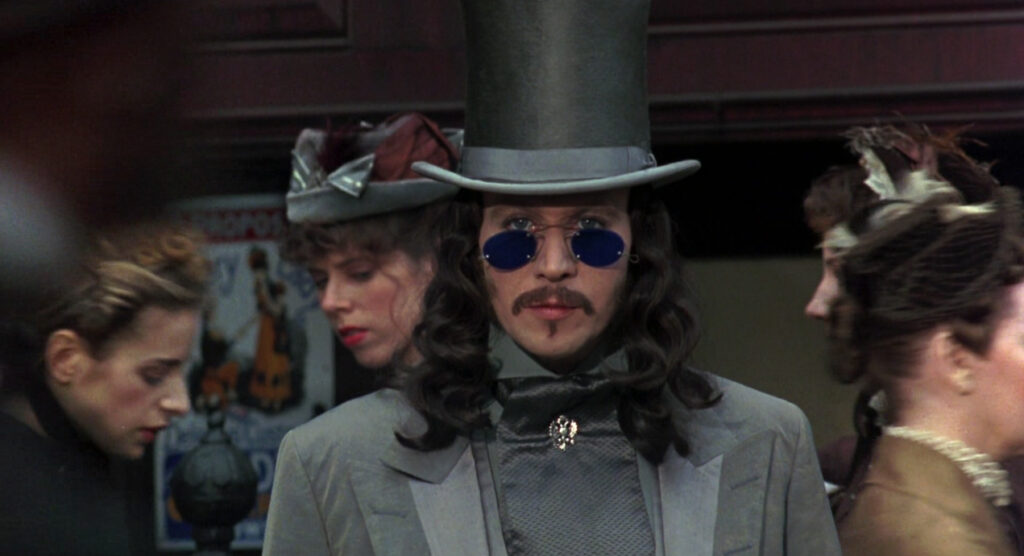
Count Dracula has appeared in over 200 films, television series and comic books, making him the definitive vampire in popular culture. No other horror character has been so extensively adapted and reimagined. From Lugosi's iconic portrayal to modern versions such as Gary Oldman in Francis Ford Coppola's Bram Stoker's Dracula (1992), the character has evolved to reflect the fears, desires and obsessions of every generation.
Besides his presence in horror films, Dracula has inspired comedies (Dracula: Dead and Loving It), animated adaptations (Hotel Transylvania), video games (Castlevania) and even contemporary literary adaptations such as Dracul (2018), written by Dacre Stoker, a descendant of Bram Stoker.
Dracula's cultural impact lies not only in the character, but also in the way he redefined the vampire archetype. Before Stoker, vampires were grotesque and monstrous figures. Thanks to Dracula, they became seductive, aristocratic and enigmatic - a portrayal that continues to shape literature and cinema to this day.
8. Additional Curiosities
8.1. The Lost Pages of Dracula
The original manuscript of Dracula contains references to over 100 pages that were removed during the editing process. These pages, which included additional scenes and characters, would have given more context to the story and added depth to some of its protagonists.
The manuscript, discovered in a Pennsylvania barn in 1980, revealed an alternate ending in which Dracula's castle is destroyed by a volcanic eruption after his death. However, the first 102 pages are missing, leading to speculation that some of these scenes may have contained elements of the short story Dracula's Guest, published posthumously in 1914. According to Dacre Stoker, Bram Stoker's great-grandnephew, this short story may have been the original opening of the novel, in which an Englishman (possibly Jonathan Harker) encounters supernatural events before reaching the Count's castle.
The manuscript is now owned by Microsoft co-founder Paul Allen, who paid a considerable sum for it. This document, with crossed out lines referring to deleted events, is considered an invaluable piece of literary history. In addition, the prologue of the Icelandic edition (Makt Myrkranna) suggests that Dracula may be linked to "recent horrors in London", possibly echoing the crimes of Jack the Ripper.
8.2. The Connection with Frankenstein
Although Dracula and Frankenstein were written by different authors in different periods, they share literary and cultural roots. Both works are deeply influenced by The Vampyre (1819), by John Polidori, the story that introduced the figure of the vampire into English literature.
Moreover, both novels emerged from a literary context in which science, morality, and the fear of the unknown were closely intertwined. While Frankenstein explores the dangers of unchecked science, Dracula ombines superstition with technological advances to reflect the anxieties of modernity.
Finally, both works share a gothic tone and a terrifying atmosphere that has made them eternal benchmarks of the genre.
8.3. Stoker’s Research on Vampirism
To bring his novel to life, Stoker conducted meticulous research on vampirism. He consulted historical texts, European legends, and travelers' accounts. Among his most prominent influences were:
- Eastern European folklore, which describes vampires as reanimated corpses that devastate entire villages.
- The tuberculosis epidemic in New England, commonly associated with vampirism, where families exhumed bodies to stop the spread of the "disease".
- Medical and scientific advances, such as blood transfusions, which Stoker included in the novel to give it a touch of realism.
Stoker combined these elements with his own imagination, creating a vampire who embodied not only the fear of death, but also of contagion, foreignness, and moral decay—themes deeply rooted in the Victorian subconscious.
Final Thoughts
Dracula is much more than a horror novel: it is a reflection of Victorian anxieties, a mosaic of cultural and historical influences, and a work that transcends its time. With its epistolary narrative, unforgettable characters and Gothic atmosphere, Bram Stoker created a story that continues to captivate readers and audiences more than a century after its publication.
The late success of the novel and the evolution of its cultural impact - from stage adaptations to cinema and contemporary literature - demonstrates Dracula's ability to adapt and remain relevant in any era.
By blending historical, literary and personal elements, Stoker gave life to a myth that continues to be explored, reinterpreted and celebrated around the world.
And now, dear reader, what do you think of these secrets and curiosities about Dracula? Do you know any other interesting details about this immortal work? Share them in the comments and let's continue to unravel the mysteries of the most famous vampire in literature!
By the way, and as I mentioned in the main article about Dracula:
The book is now in the public domain, so you can read it free in English here or in Spanish here.
It's even available on YouTube as an audiobook, in English, Spanish, German…
References on Dracula’s Facts and Curiosities
- «10 Blood-Curdling Facts About Dracula«
Source: Paper & Packaging
URL: https://www.howlifeunfolds.com/learning-education/10-blood-curdling-facts-about-dracula - «Five little-known facts about Dracula«
Source: OUPblog (Oxford University Press)
URL: https://blog.oup.com/2022/05/five-things-you-didnt-know-about-dracula/ - «5 fascinating and unknown facts uncovered from Bram Stoker's vaults«
Source: Penguin Books UK
URL: https://www.penguin.co.uk/articles/2018/10/fascinating-and-unknown-facts-uncovered-from-bram-stoker-archive
Academic and Literary Sources on Dracula
- «Bram Stoker's Dracula«
Source: British Library
URL: https://www.britishlibrary.cn/en/works/dracula - «Dracula and Victorian Culture«
Source: The Victorian Web
URL: http://www.victorianweb.org/authors/stoker/index.html - «The real Dracula? The bloodthirsty life of Vlad the Impaler«
Source: History Extra (BBC History Magazine)
URL: https://www.historyextra.com/period/medieval/the-real-dracula-the-bloodthirsty-life-of-vlad-the-impaler/ - Full text of Dracula in English
Source: Project Gutenberg
URL: https://www.gutenberg.org/ebooks/345
Recommended books about Dracula and Bram Stoker
- «Dracula«
Author: Bram Stoker
Recommended edition: Penguin Classics (with introduction and additional notes).
ISBN: 978-0141439846 - «Something in the Blood: The Untold Story of Bram Stoker, the Man Who Wrote Dracula«
Author: David J. Skal
Publisher: Liveright
ISBN: 978-1631490101 - «Dracula Unearthed«
Author: Clive Leatherdale
Publisher: Desert Island Books
ISBN: 978-1905328147 - «The New Annotated Dracula«
Author: Bram Stoker, edited by Leslie S. Klinger
Publisher: WW Norton & Company
ISBN: 978-0393064506



 EN
EN  ES
ES